Teaching
Academic Courses
In my teaching at the College of the Holy Cross, I offer Russian language courses alongside a range of content courses taught in English, focusing on Russian literature, cinema, and comparative literary studies. My pedagogical approach integrates language acquisition with cultural and critical analysis, allowing students to engage with Russian texts and films in both linguistic and interdisciplinary contexts. I regard my work in Study Abroad as a natural extension of this teaching, as it deepens students’ immersion in the language and culture while reinforcing the intellectual frameworks developed in the classroom.
Russian Cinema
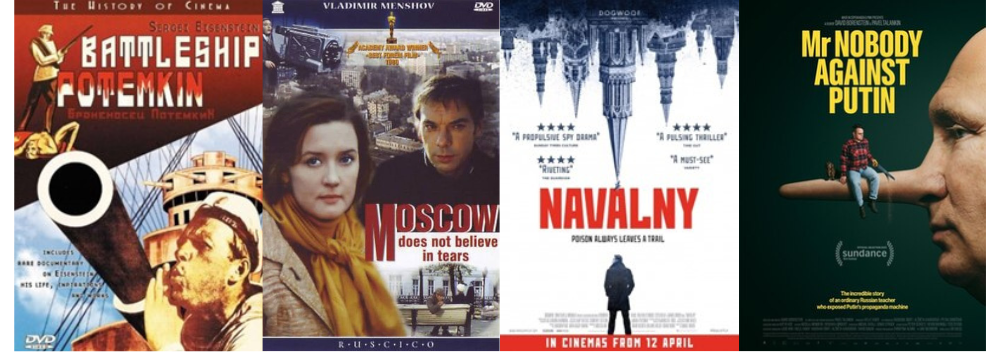
This course examines the development of Russian cinema from its silent pre-revolutionary stage up to post-Soviet blockbusters. We will focus on the artistic and technical achievements of Russian filmmaking and their contribution to practical and theoretical aspects of Western cinema. We will discuss the distinction between Russian cinema as an ideological tool of a totalitarian state, and Western cinema as an entertainment industry. Screenings will include a variety of cinematic genres and styles such as Eisenstein’s legendary The Battleship Potemkin (1925) and the Oscar-winning films Moscow Does Not Believe in Tears (1979) and Burnt by the Sun (1994), Navalny (2022) and Mr Nobody Against Putin (2025) documentaries.
Elementary Russian 1
This elementary Russian course is intended for students with no prior knowledge of Russian to achieve a “novice-high” proficiency level. By the end of the academic year students will gain the ability to conduct simple conversations on everyday topics, participate in situational dialogues, and read texts of easy to moderate difficulty. We will also learn elementary Russian grammar. By the end of this course the Russian vocabulary will be over a thousand words. Students will learn about Russian cultural norms and expectations, and will be given regular mini-lectures in English about Russian cultural history.
Elementary Russian 2
This course is the second semester of the two-semester First Year Russian Speak Russian in a Year! This second semester of our elementary Russian course is intended for students with one semester of Russian who are seeking to achieve a “novice-high” proficiency level. By the end of the academic year students will gain the ability to conduct simple conversations on everyday topics, participate in situational dialogues, and read texts of easy to moderate difficulty. We will also continue to learn elementary Russian grammar and will learn by heart several famous Russian poems.
Madness in Russian Literature and Culture
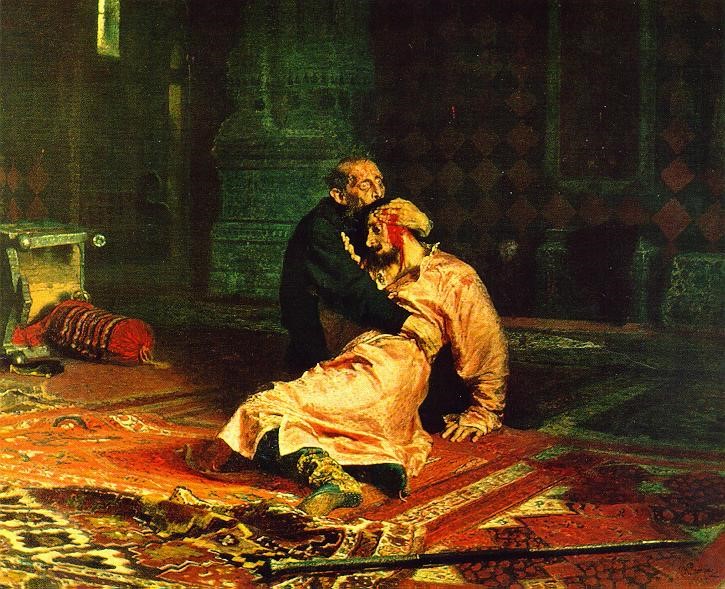
From current events in post-Soviet Russia to classic Russian literature, madness is an ubiquitous element of the Russian experience. We will cover a broad range of works—from medieval to Soviet masterpieces—to investigate the evolution of madness in Russian culture. The protagonists of the novels and short stories we will explore range from holy fools to everyday madmen to chronically troubled spirits. The reading will include Pushkin’s The Queen of Spades, Gogol’s The Diary of a Madman, Dostoevsky’s The Idiot, Chekhov’s The Black Monk and Ward No 6, Nabokov’s The Defense, and Bulgakov’s The Master and Margarita. We will also examine manifestations of fictional insanity in film, opera, the visual arts and the current events.
Nineteenth Century Russian Literature
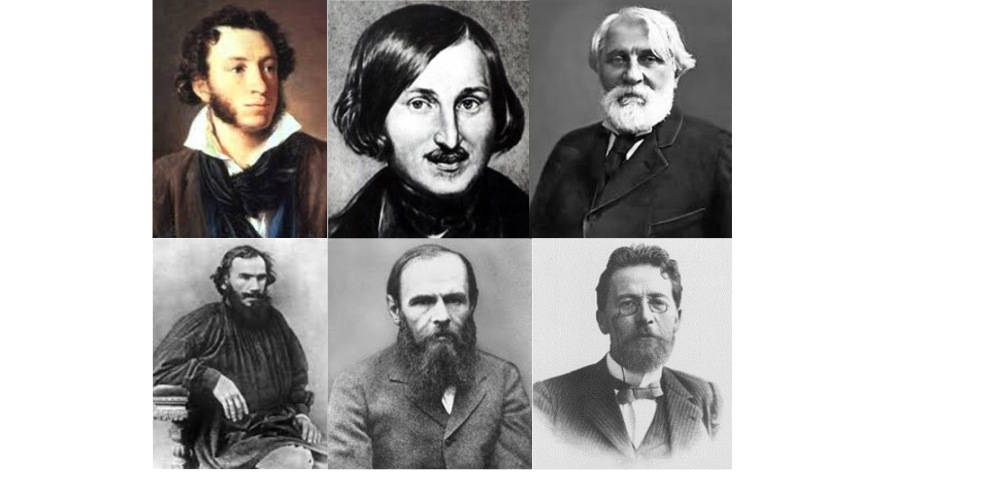
This course is an English-language survey of 19th century Russian literature. After several introductory lectures, we will concentrate on selected masterpieces by Alexander Pushkin, Nikolai Gogol, Ivan Turgenev, Fedor Dostoevsky, Leo Tolstoy and Anton Chekhov, considering each work in terms of its artistic merits and its place within a larger cultural context. Our focus will be on the role of fiction in Russian history, literary movements in Russia, and echoes of Russian literary masterpieces in the other arts, especially film and music.
Tales of Desire
This course treats the representation of desire in great works of the Russian and Western literary traditions. We will examine the transformation of this theme over the ages and in various literary genres. The reading will include ancient mythology, drama, prose and poetry written by representatives of various historical and cultural milieus. We will also watch and discuss several film adaptations of the literary works.
As a professor, author, and former actress, I introduce students at the College of the Holy Cross to the depth of Russian language and the richness of its culture.