
Academic Books
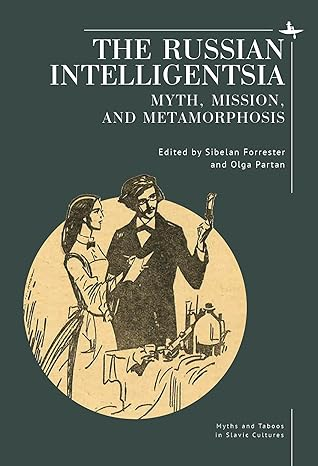
The Russian Intelligentsia: Myth, Mission, and Metamorphosis
The Russian intelligentsia is the historic phenomenon of an educated opposition, and it has provoked a substantial body of Russian and Western publications. This book focuses on the intelligentsia’s Myth, Mission, Metamorphosis as discovered in literature, journalism, and theater. The chapters define essential elements of the myth of the intelligentsia as a distinctive social group and a spiritual formation claiming high moral standards and expectations for the self and for society.
Review
“This splendid collection of essays will help us revise our too often stereotyped idea of the intelligent, whether demonized or revered, weaponized or worn as a badge of honor. The persuasiveness of this volume lies in its refusal to generalize. It feeds into no ideology. Both Any and Forrester describe twentieth‑century cases where Power (vlast’) and the creative intelligentsia not only share resources but actively court and reshape one another. Chekhov’s nonideological code of politeness and personal decency prompted Mikhail Lotman to call him ‘the most typical intelligent of all Russian writers.’”
— Caryl Emerson. The Russian Review
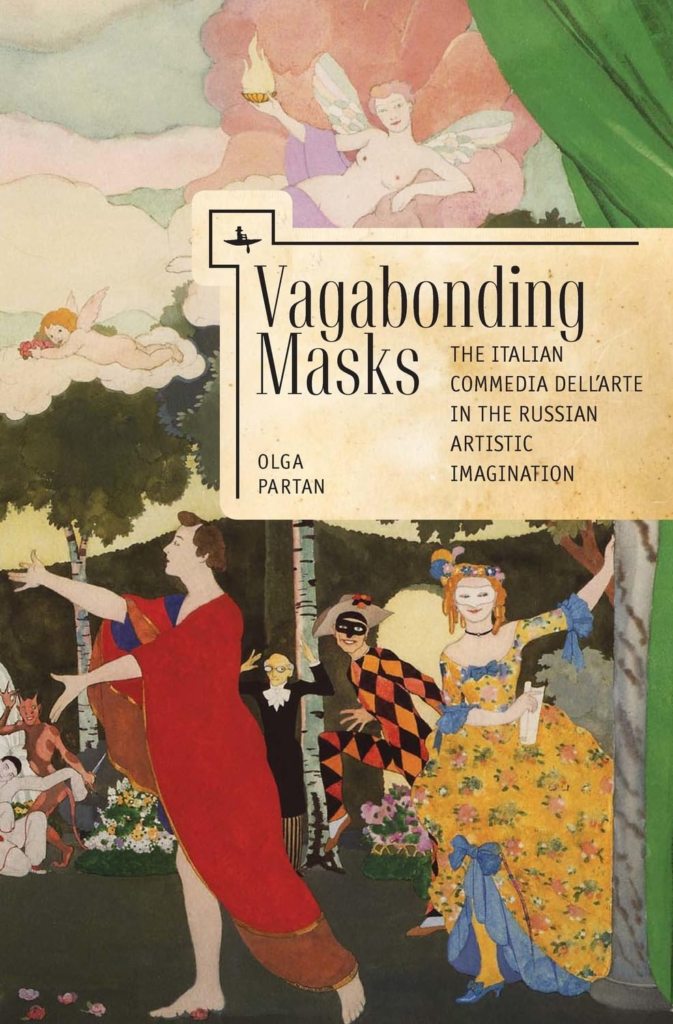
Vagabonding Masks: the Italian Commedia dell’arte in the Russian Artistic Imagination
This book explores how the iconic masks and traditions of the Italian commedia dell’arte have shaped the Russian artistic imagination for over three centuries, inspiring figures from Nikolai Gogol and Vladimir Nabokov to theater director Evgenii Vakhtangov and pop icon Alla Pugacheva.
Review
“Olga Partan’s book demonstrates a truly impressive depth of expertise, innovative thinking, and profound knowledge of the history of the commedia dell’Arte in Italy as well as other European countries through which its influence penetrated. Most impressively, the book describes and analyzes the commedia’s presence in Russia across centuries, from the seventeenth to the twenty-first. This first book on commedia dell’Arte in Russia written by a true expert in the field, The Italian Commedia dell’Arte in the Russian Artistic Imagination is a must reading for literary and cultural historians as well as for historians of theater. Clearly and lively written, it can be used in courses on literature and the history of theater.”
– Irina Reyfman, Columbia University
Vagabonding Masks (RUS): the Italian Commedia dell’arte in the Russian Artistic Imagination
The iconic masks of the Italian commedia dell’arte–Harlequin, Pierrot, Colombina, Pulcinella, and others–have been vagabonding the roads of Russian cultural history for more than three centuries. This book explores how these masks, and the artistic principles of the commedia dell’arte that they embody, have profoundly affected the Russian artistic imagination, providing a source of inspiration for leading Russian artists as diverse as nineteenth-century writer Nikolai Gogol, modernist theater director Evgenii Vakhtangov, Vladimir Nabokov, and the empress of Russian popular culture Alla Pugacheva. The author presents a new perspective on this topic, showing how the commedia dell’arte has nourished a rich cultural tradition in Russia.
Review
“Olga Partan’s book demonstrates a truly impressive depth of expertise, innovative thinking, and profound knowledge of the history of the commedia dell’Arte in Italy as well as other European countries through which its influence penetrated. Most impressively, the book describes and analyzes the commedia’s presence in Russia across centuries, from the seventeenth to the twenty-first. This first book on commedia dell’Arte in Russia written by a true expert in the field, The Italian Commedia dell’Arte in the Russian Artistic Imagination is a must reading for literary and cultural historians as well as for historians of theater. Clearly and lively written, it can be used in courses on literature and the history of theater.”
– Irina Reyfman, Columbia University
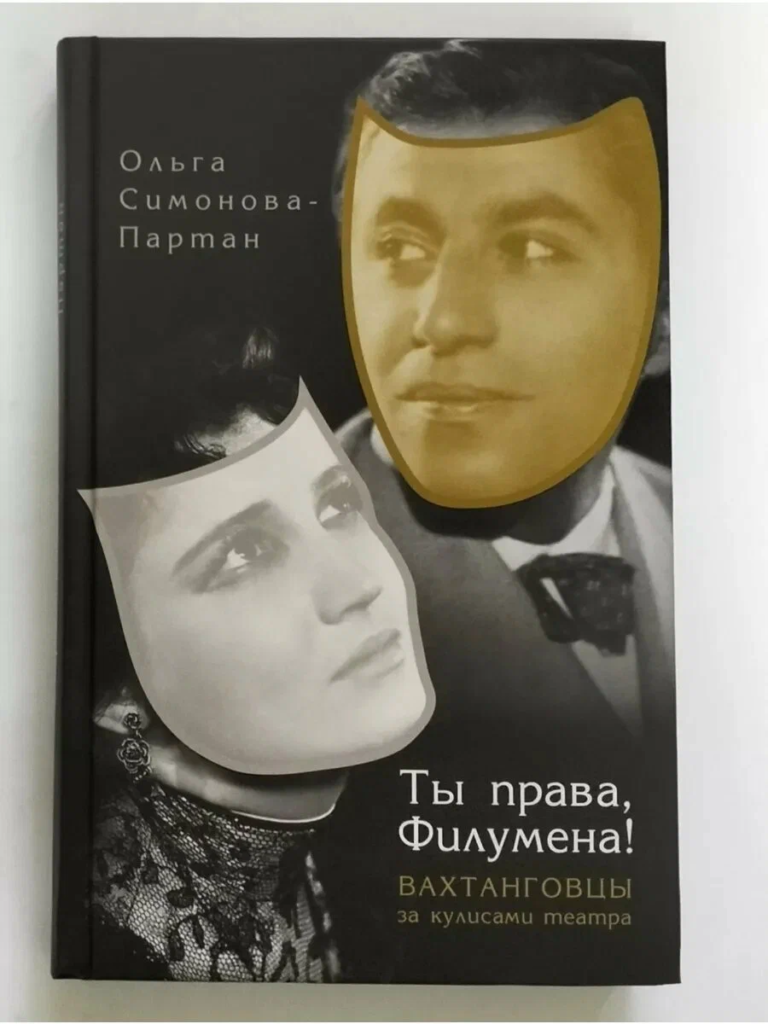
You Were Right, Filumena!
In this critically acclaimed momoir, Olga vividly recounts the dramatic relationship between her parents—renowned theater director Evgeniy Simonov and actress Valeria Razinkova—and the passions that unfolded both onstage and behind the scenes of Soviet theater.